
Ramen looks simple: noodles in soup with a few toppings. But walk into five ramen shops in Singapore, Hong Kong, Bangkok, Kuala Lumpur or Jakarta and you could get five completely different bowls, from a clear, golden shoyu to a thick, almost gravy-like pork-bone soup, or noodles with no soup at all. This guide explains the main types of ramen, what goes into each one, and how halal ramen is made, so you know what you are ordering.
What makes a bowl of ramen
Almost every bowl of ramen is built from five parts. Once you know them, any ramen menu becomes easy to read.
- Broth (soup). The base, made by simmering bones, meat, seafood or vegetables for hours. A clear broth is called chintan; a cloudy, creamy one boiled hard until the fat and collagen emulsify is called paitan.
- Tare (seasoning). A concentrated sauce spooned into the empty bowl before the broth goes in. It is the tare, not the broth, that gives most styles their name: shoyu (soy sauce), shio (salt) or miso.
- Aroma oil. A spoonful of flavoured fat on top, such as chicken fat, pork lard, garlic oil or chilli oil, which carries flavour and keeps the soup hot.
- Noodles. Wheat noodles made with kansui, an alkaline mineral water that gives ramen its springy bite and yellow colour. They range from thin and straight to thick and wavy.
- Toppings. Usually chashu (braised or roast meat), ajitama (a marinated soft-boiled egg), menma (fermented bamboo shoots), spring onion and nori (seaweed).
The main types of ramen at a glance
| Style | Broth | Flavour | Where it comes from |
|---|---|---|---|
| Shoyu | Usually clear chicken, sometimes with pork or dashi | Savoury, soy-sauce seasoned | Tokyo |
| Shio | Clear chicken, pork or seafood | Light, salty, delicate | Hakodate, Hokkaido |
| Miso | Pork or chicken | Rich, nutty, often with chilli | Sapporo, Hokkaido |
| Tonkotsu | Cloudy pork bone | Creamy, rich, porky | Kurume and Hakata, Fukuoka |
| Tori paitan | Cloudy chicken bone | Creamy, lighter than tonkotsu | Modern style, all over Japan |
| Tsukemen | Thick dipping broth, served separately | Intense, concentrated | Tokyo |
| Mazesoba / abura soba | No soup, just sauce and oil | Punchy, often spicy | Tokyo and Nagoya |
| Seafood & niboshi | Clams, dried sardines, fish | Briny, umami-rich | Modern style, all over Japan |
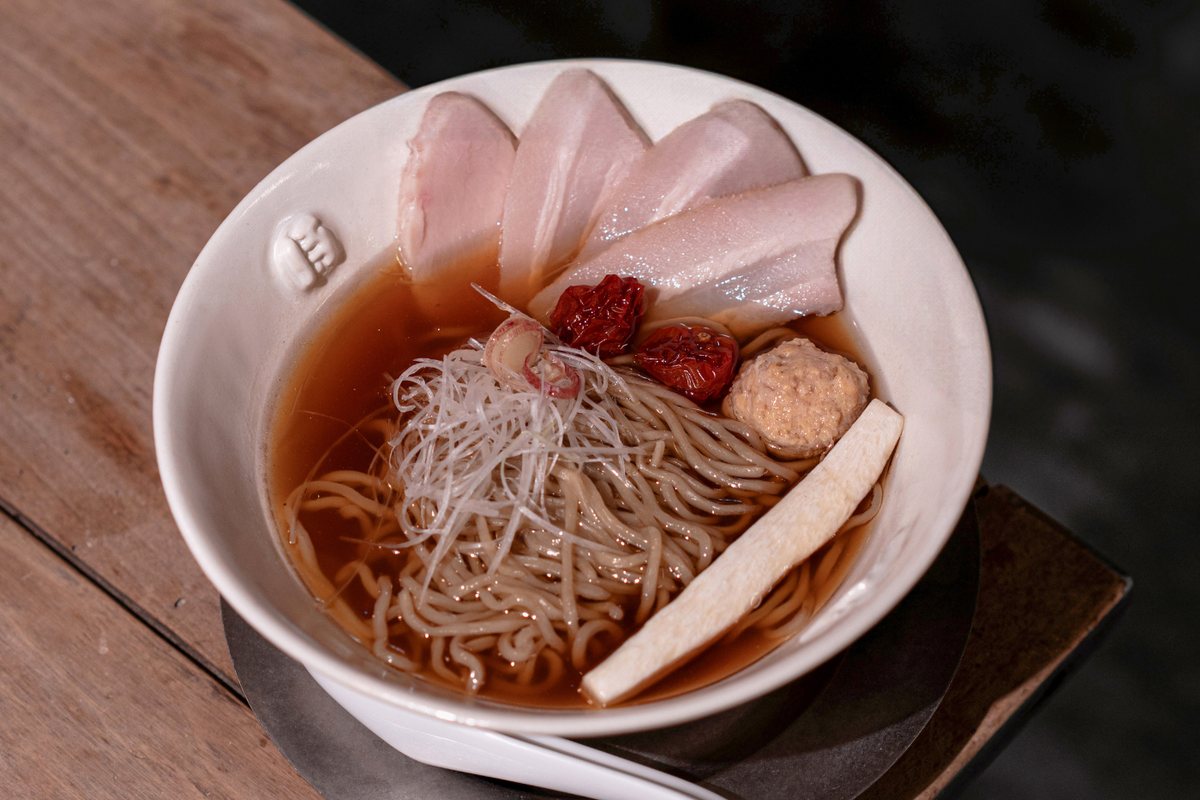 A clear shoyu bowl at Ramen Samurai, Hong Kong.
Shoyu ramen (soy sauce)
Shoyu is the original Tokyo-style ramen and still the most common style in Japan. The broth is usually a clear chicken stock, sometimes with pork bones or a Japanese dashi made from kombu (kelp) and dried fish, seasoned with a soy-sauce tare. The result is a brown, clear soup that is savoury and slightly sweet, typically served with medium-thin wavy noodles, chashu, menma and nori.
The newer generation of shoyu shops use premium soy sauces and aged chicken stocks for a deeper, cleaner flavour. Try the barrel-aged shoyu at Shugetsu in Hong Kong, the aged-chicken shoyu at Ramen Samurai, or No Name Noodle in Bangkok, a Michelin Bib Gourmand pick. See all shoyu and shio ramen.
Shio ramen (salt)
Shio is the lightest and oldest of the seasonings. The tare is salt-based, sometimes with seafood or kombu, and the broth is usually a clear chicken, pork or seafood stock. With nothing dark to hide behind, shio shows off the quality of the stock, which is why many ramen fans rate it the hardest style to get right. Hakodate in Hokkaido is the city most associated with it.
Look for a pale golden soup, thin straight noodles and lighter toppings. Ramen-ya in East Singapore does a richer take on shio, and Honobono is a Bangkok favourite.
Miso ramen
Miso ramen comes from Sapporo in Hokkaido, where it became popular in the 1960s as a warming bowl for long winters. Fermented soybean paste is blended into the tare, giving a thick, nutty, slightly sweet soup on a pork or chicken base. Sapporo-style bowls often come with stir-fried beansprouts and cabbage, minced pork, sweetcorn and a knob of butter, with thick, curly yellow noodles that hold the heavy soup.
Miso is also the base of many spicy ramens. The best known in the region is karashibi miso ramen from Kikanbo, which combines chilli heat (kara) with the tingling numbness of sansho pepper (shibi), and lets you choose each level separately. See all miso and spicy ramen.
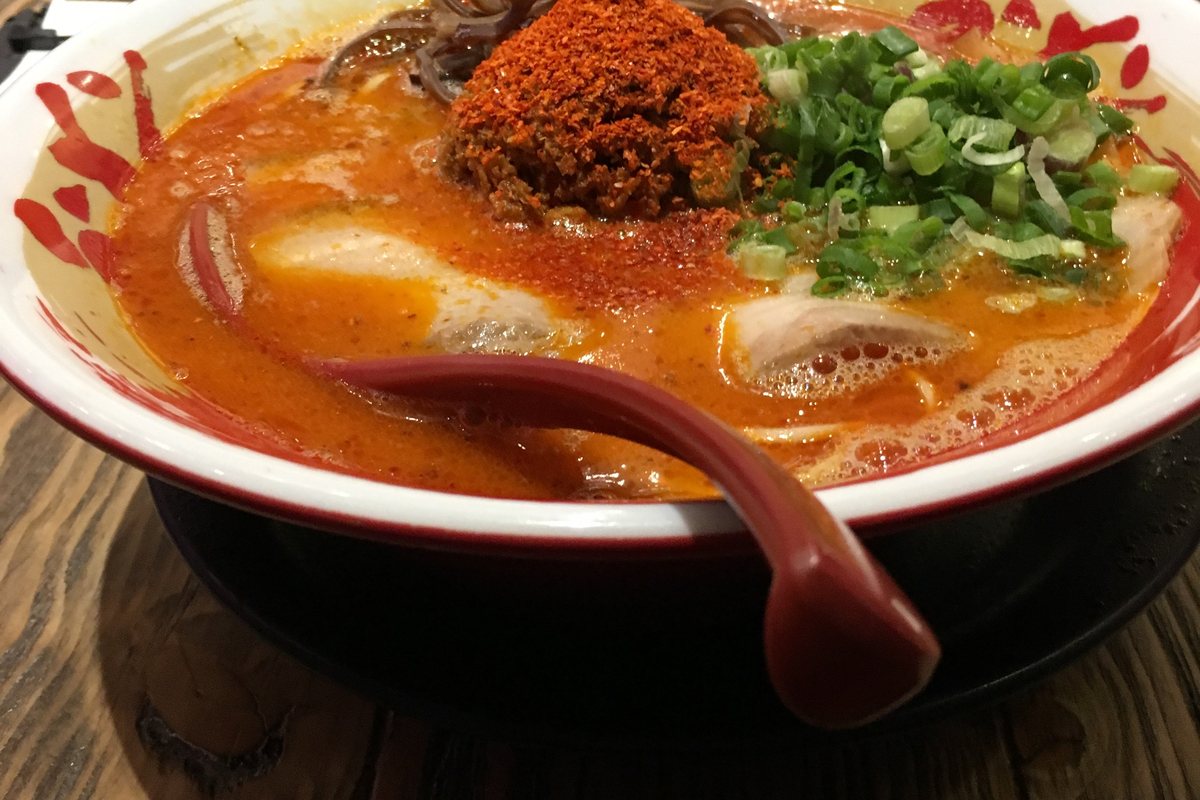 The Red King, a spicy tonkotsu, at Butao, Hong Kong.
Tonkotsu ramen (pork bone)
Tonkotsu means pork bone, and the broth is made by boiling pork bones, trotters and sometimes back fat at a hard, rolling boil for anywhere from 10 to 20 hours or more. The collagen and fat break down and emulsify, turning the soup cloudy, creamy and rich. It comes from Fukuoka on the southern island of Kyushu: the style began in Kurume and was made famous by the stalls of Hakata.
Hakata ramen is the classic version, with very thin, straight noodles that you can order by firmness, from soft to barikata (extra firm). Many shops offer kaedama, a second serving of noodles to drop into the rest of your soup. Other versions add black garlic oil (ma-yu), as at Nantsuttei, or mix in soy sauce for a tonkotsu-shoyu.
For the classic, try Hakata Ikkousha in Singapore, Butao in Hong Kong or Ippudo in Jakarta. See all tonkotsu ramen.
Tori paitan (creamy chicken)
Tori paitan is the chicken version of the tonkotsu technique: chicken bones, carcasses and feet are boiled hard until the soup turns opaque and creamy. It is a little lighter and sweeter than pork-bone broth but just as rich, and it has become one of the most fashionable styles in Japan and across Asia. Some shops whisk or blend it until it is frothy.
Because it uses no pork, tori paitan is also the base for most halal and pork-free ramen. Try Mensho Tokyo in Singapore and Bangkok, the frothy 'cappuccino' bowl at Zagin Soba in Hong Kong, Ramen Keisuke Tori King in Singapore or Marutama in Jakarta. See all chicken paitan ramen.
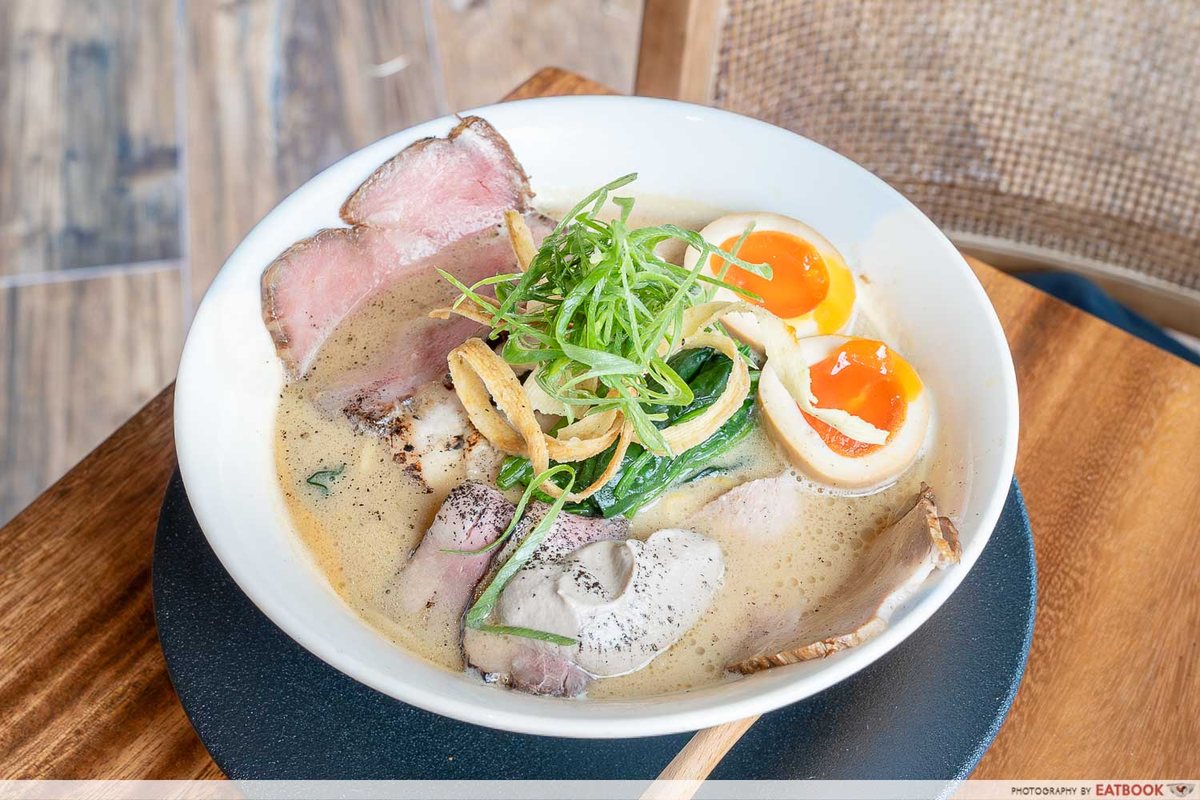 Creamy tori paitan at Mensho Tokyo, Singapore.
Tsukemen (dipping ramen)
With tsukemen, the noodles and soup come in separate bowls. The noodles are thick, chewy and usually served cool or at room temperature, and you dip each mouthful into a small bowl of very concentrated, often pork-and-seafood broth. The style was popularised in Tokyo by Kazuo Yamagishi of Taishoken in the 1950s and 1960s.
When you finish the noodles, ask for soup-wari: the staff top up the dipping broth with hot dashi so you can drink it as a soup. Try Shugetsu in Hong Kong, Menya Itto in Bangkok, Kanbe in Kuala Lumpur and Menya Sakura in Jakarta.
Mazesoba and abura soba (soupless ramen)
Mazesoba means 'mixed noodles': thick noodles sit in a small amount of concentrated sauce and aroma oil, under a pile of toppings, and you mix everything together before eating. Abura soba ('oil noodles') is the Tokyo version, usually finished with a splash of vinegar and chilli oil. Taiwan mazesoba was created by Menya Hanabi in Nagoya and comes with spicy minced meat, garlic, chives and a raw egg yolk, plus a scoop of rice at the end to mop up the sauce.
Singapore has its own twist: A Noodle Story, a Bib Gourmand hawker stall, mixes ramen with local wanton mee, and Torasho does a dry ramen inspired by bak chor mee. See all tsukemen and mazesoba.
Tantanmen and other spicy ramen
Tantanmen is Japan's take on Sichuan dan dan noodles: a sesame-rich soup with chilli oil and spicy minced meat. You will also find spicy versions of almost every style, from Butao's chilli-and-miso Red King to mala bowls with Sichuan peppercorns. Enishi in Bangkok and Kuala Lumpur is known for its soupless dan dan noodles.
Seafood and niboshi ramen
Seafood ramen builds its broth on clams, oysters, sea bream or niboshi (small dried sardines), for a lighter, briny and very savoury soup. Niboshi bowls can be bold and slightly bitter; clam broths are delicate and sweet. Try the hamaguri clam broth at Konjiki Hototogisu in Singapore, oyster ramen at Next Shikaku or sea bream ramen at Maru De Sankaku in Hong Kong. See all seafood ramen.
How halal ramen is made
Traditional ramen is rarely halal. Many broths use pork bones, the chashu is usually pork, the aroma oil may be lard, and the tare and egg marinade often contain mirin (sweet rice wine) or sake. Halal ramen shops rebuild the bowl so that every part is permissible:
- Broth: made from chicken or beef bones, or from seafood or vegetables, never pork. Creamy chicken paitan is the most common base, because it gives the richness people expect from tonkotsu.
- Meat: chashu is replaced with chicken or beef, braised, roasted or torched, from halal-slaughtered animals.
- Fat and oil: chicken fat or vegetable oils instead of pork lard or back fat.
- Seasoning: no mirin, sake or other alcohol in the tare or egg marinade. Naturally brewed soy sauce produces a little alcohol as it ferments, so certified kitchens use soy sauce and miso that are themselves halal-certified.
- Noodles and other ingredients: noodles, stocks, sauces and gelatin all have to come from halal-certified suppliers.
- The kitchen: no pork or alcohol on the premises, with separate equipment and a supply chain that is audited.
Halal certification is given by a national body: JAKIM in Malaysia, MUIS in Singapore and BPJPH in Indonesia, working with the MUI on religious rulings. Certified shops display the logo, and you can usually check the certificate on the certifier's website.
Halal-certified, pork-free and Muslim-friendly are not the same thing. A pork-free shop serves no pork, but it may still use mirin or non-certified meat and ingredients. Some chains also run pork-free and pork-serving branches side by side: Hakata Ikkousha at Plaza Indonesia is one of its non-pork outlets in Jakarta, while others in the city serve pork. If certification matters to you, look for the logo or ask the staff.
For halal ramen, try Maruki Ramen in Kuala Lumpur, which makes its broth from free-range chicken, or Haraku Ramen at Grand Indonesia in Jakarta. See all halal ramen and pork-free ramen.
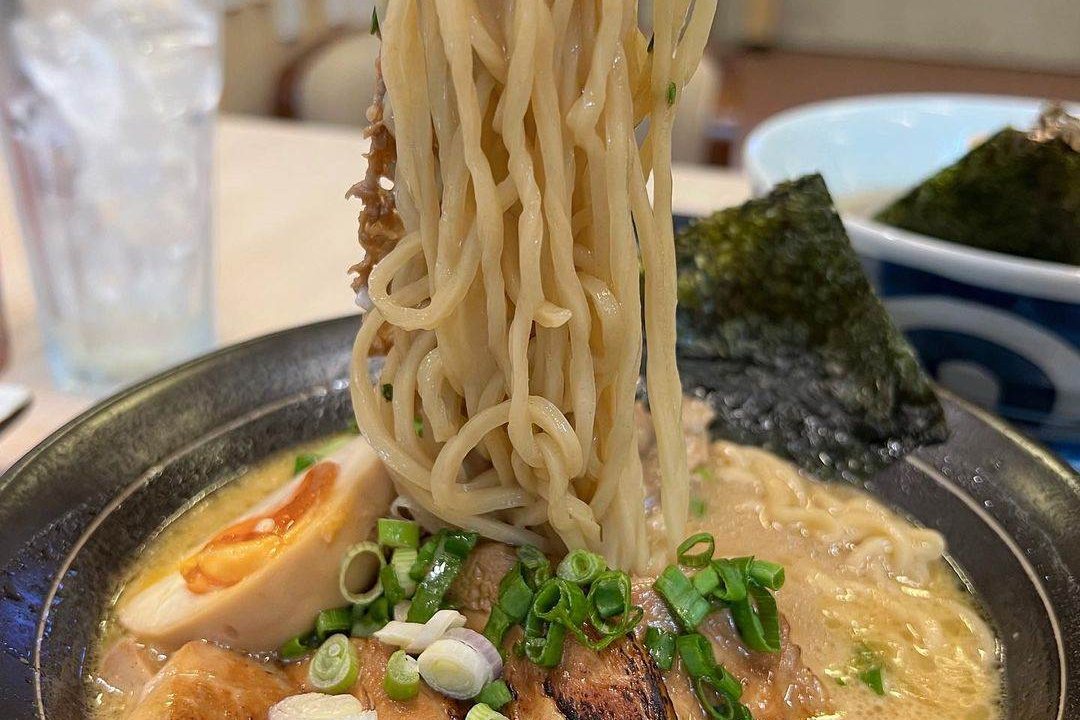 Halal-certified chicken ramen at Maruki Ramen, Kuala Lumpur.
Vegan and vegetarian ramen
Vegan ramen swaps bone broth for a stock of kombu, shiitake mushrooms and vegetables, often enriched with soy milk, nut milk or sesame paste to give it body. The chashu is replaced with tofu, mushrooms or grilled vegetables, and the egg is left out. Towzen in Kuala Lumpur is fully vegan, with soya and walnut milk broths, and Ichitora in Hong Kong has a vegan kombu and onion bowl. Note that vegan is not automatically halal-certified. See all vegan ramen.
Common toppings explained
- Chashu: slices of braised or roast meat, traditionally pork belly or shoulder; chicken, duck or beef in many modern and halal bowls.
- Ajitama: a soft-boiled egg with a jammy yolk, marinated in soy-based sauce.
- Menma: fermented bamboo shoots, slightly sweet and crunchy.
- Nori: sheets of dried seaweed, usually tucked against the side of the bowl.
- Negi: spring onion or leek, sliced thinly.
- Kikurage: crunchy wood-ear mushroom, common on tonkotsu.
- Narutomaki: a fish cake with a pink swirl, a classic on Tokyo shoyu.
- Beni shoga: red pickled ginger, often on the table at Hakata shops.
Which ramen should you order?
If you are new to ramen, start with a shoyu for a classic, balanced bowl, or a tonkotsu if you like rich, creamy soups. Try shio when you want something light, miso on a cool day or when you want spice, and tsukemen or mazesoba when you want the noodles to be the star. For no pork, choose a tori paitan, seafood or halal shop.
Ready to eat? Browse ramen in Singapore, Hong Kong, Bangkok, Kuala Lumpur and Jakarta, or see every ramen shop in the guide.